Magazine SO-EN, March 2024 issue: Interview VOL.6, the last issue, Pokecolo Creators x ha|za|ma Ryosuke Matsui, Round-table Discussion


※This article is machine translated.
Thinking with Cocone
How to become a fashion designer working in the virtual space?
VOL.6 Final
Pokecolo Creators x ha|za|ma Ryosuke Matsui Round-table Discussion
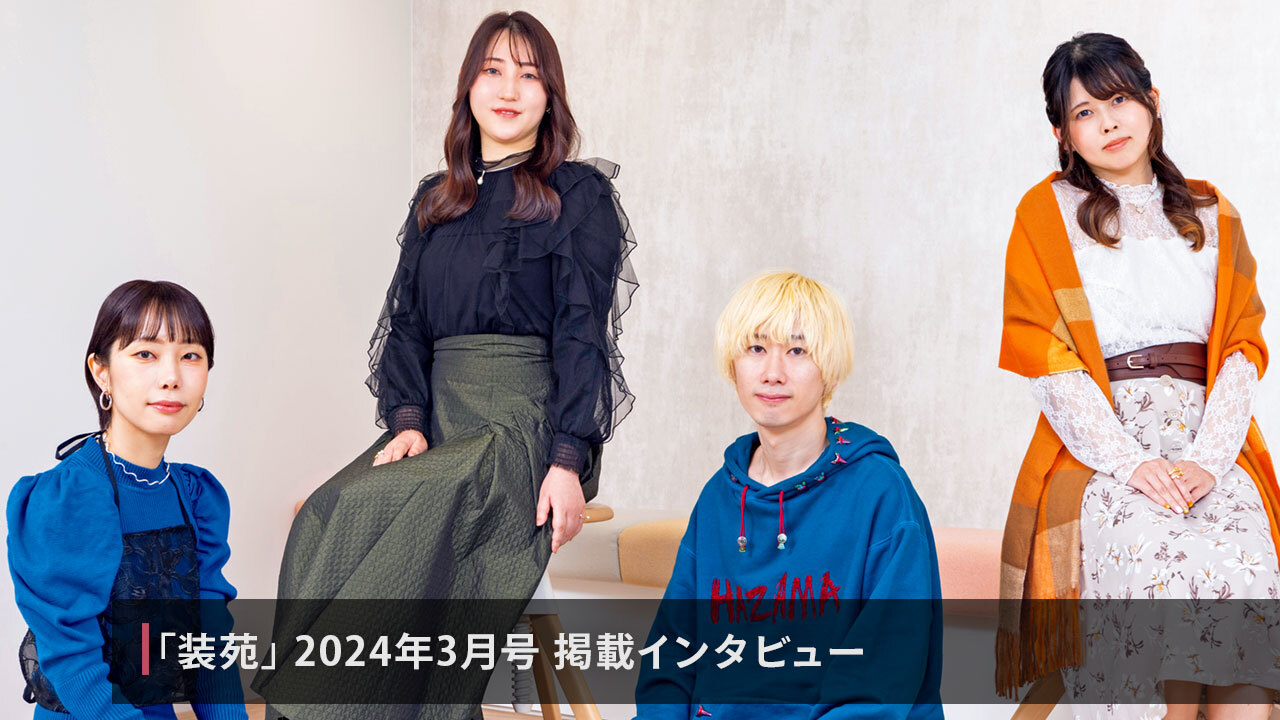
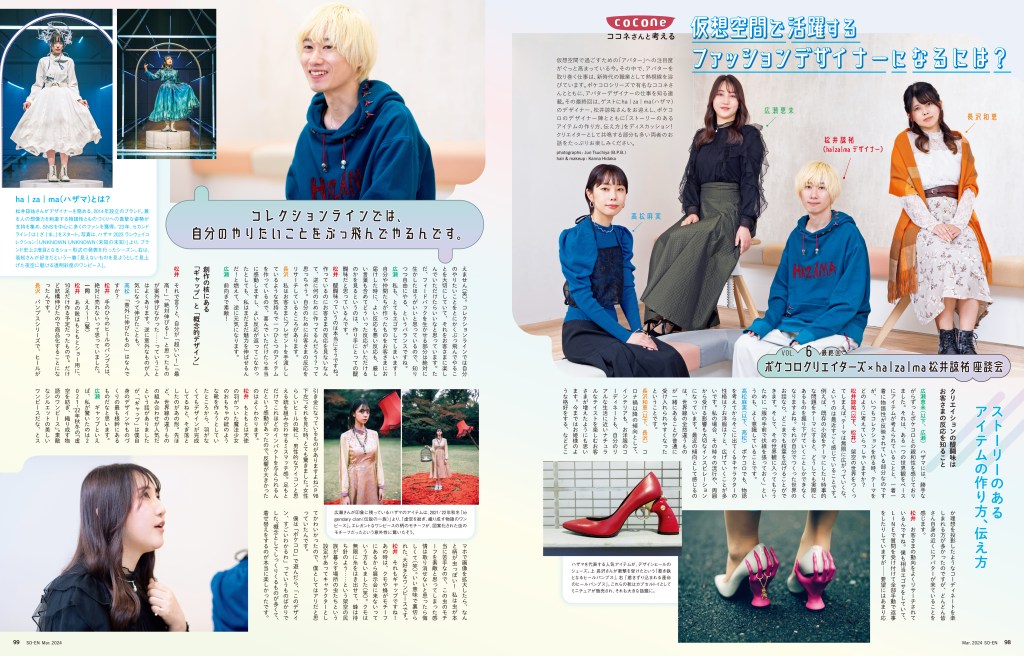
Nowadays, attention to ” avatars ” for spending time in temporary virtual spaces is growing much more intense. In this context, the work surrounding avatars is being eagerly watched as a profession for the new era. In this series of articles, we will learn about the work of avatar designers together with Cocone, famous for his Pokecolo series. In this final installment, we welcome as a guest Ryosuke Matsui, designer of ha | za | ma (Hazama), and discuss “how to create and convey items with a story” with the Pokecolo designers! Please enjoy the conversation between these two creators, who share many similarities as creators.
Asami Takamatsu
A member of the Product Planning and Design Team, Pokecolo Project, she joined ” Cocone ” in 2014. She is an art director and item designer in charge of fashion, and also multi-tasks in directing outsourced production.
Emi Hirose
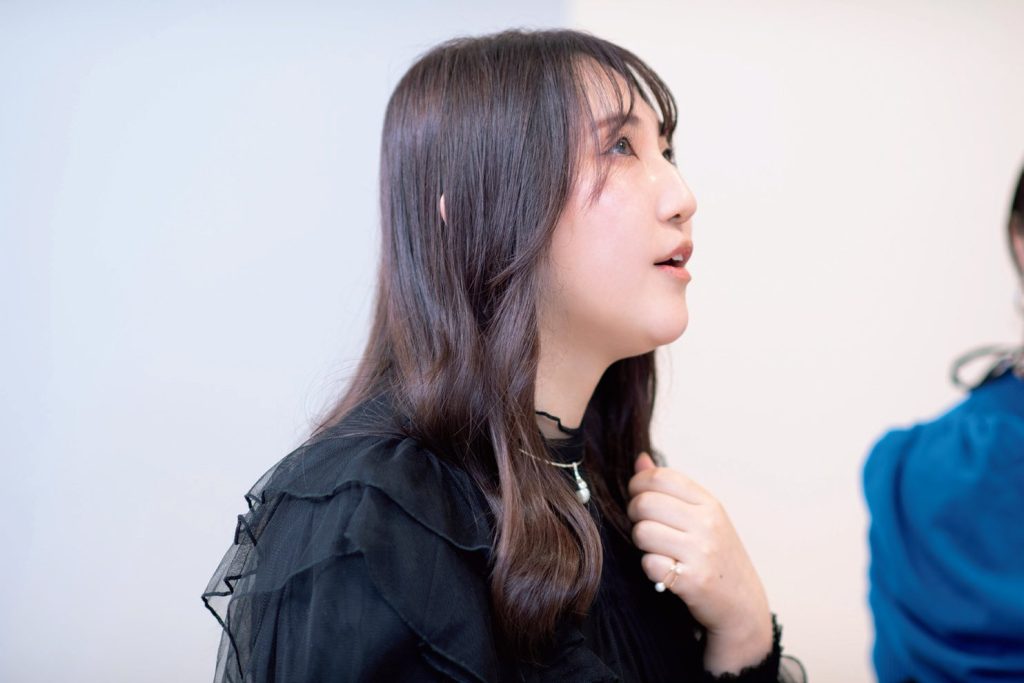
Worked at Pokecolo Project, Product Planning and Design Team, joined ” Cocone ” in 2014. She has worked on many hit products as creative director, art director and item designer.
Ryosuke Matsui
Born in 1989, Matsui Ryosuke graduated from the Faculty of Commerce at Keio University and then from Bunka Fashion College II (evening course). Launched his own brand Matsui Ryosuke in 2012, which was renamed to its current name ha | za | ma in 2002.
X (formerly Twitter)
@MatsuiRyosuke
Instagram
@ha_za_ma
Katsue Nagasawa
She is a member of the Product Planning and Design Team, Pokecolo Project, and joined ” Cocone ” as a new graduate in 2018. She works as an art director and item designer in charge of interior design, and is responsible for popular gachas.
How to create and tell items with a story
The best part of creation is knowing the customer’s reaction
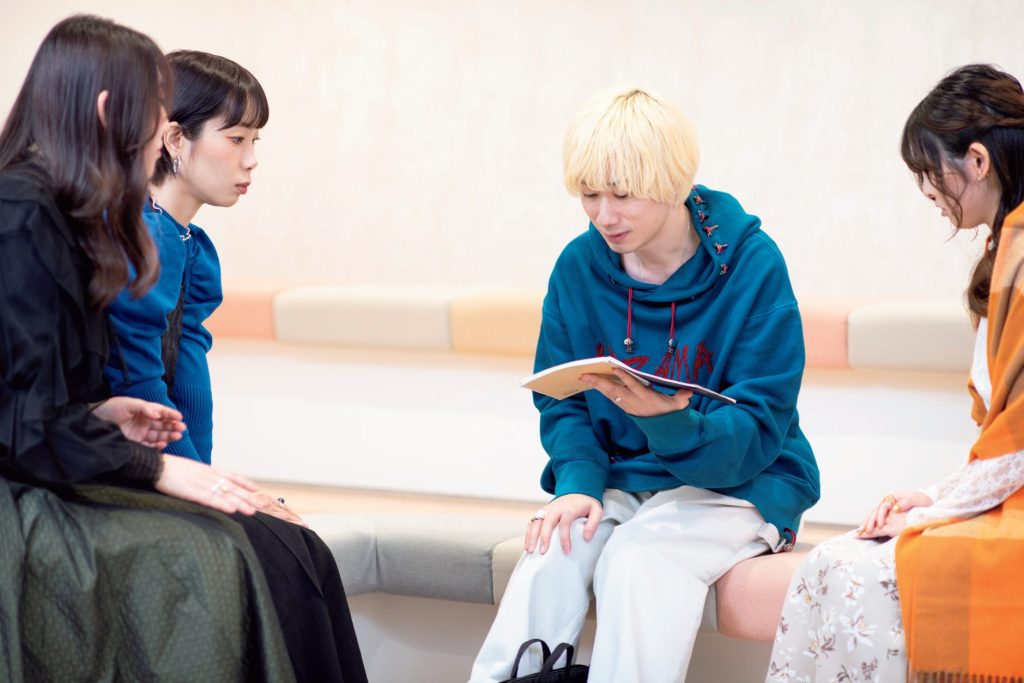
Emi Hirose (Hirose): I have always felt that Hazama has an affinity with Pokecolo. That is, the items are based on a certain worldview, and each piece of clothing reflects a story.
Ryosuke Matsui (Matsui): I have recently been feeling that once you create a fictional world, your themes can expand infinitely. For example, if you take an existing novel or a current issue as your theme, you can only delve into what actually exists. If it is a story about a world you have created yourself, you can expand your branches and leaves as far as you want. I am also very conscious of ” foreshadowing in front of the clothes” in order to get people to enter that worldview.
Mami Takamatsu (Takamatsu): Even in Pokecolo, what is the character’s personality that appears there after you think of the story? What are their clothes? I often expand the story. In my case, trends of the time and influences from my surroundings are also important inspirations. What I feel as a recent trend is that it has become easier to accept the fact that things with completely different world lines are together in a normal way.
Katsue Nagasawa (Nagasawa): Since the Corona Disaster, I think there has been an increase in the number of customers who enjoy natural tastes that are close to their own real lives, both in terms of interior design and clothing coordination. Until now, many customers have enjoyed coordinating their clothes in a way that projects some ideal, such as dressing up like a princess, but I feel that avatars are coming closer and closer to the users themselves.
Matsui: You do a lot of research on customer trends, don’t you? I also do a lot of ego-searching, and I accept questions on line and reply to them all manually, but – I don’t respond to requests very often (laughs). In the collection line, I place importance on going out on a limb and doing whatever I want to do, and I hope that the customers enjoy it. However, I definitely think it is better to make use of feedback where I can, so I strike a balance between knowing what I want to do and doing it freely.
Hirose: I, too, am very egotistical! I think it is a real thrill for a creator to see what kind of reactions, good, bad, or harsh, we receive when we deliver what we and our friends have made to our customers.
Matsui: I think that’s really what the real thrill is. If I don’t see the reaction of the customer when I am making something, I wonder what I am making it for. I wonder what I am making it for. I am researching the customer’s reaction for my own sake.
Nagasawa: I make each item as if I am handing a gift to the customer, so I am truly moved when they are pleased with the item, and even if I do not get a good response, I am still able to improve my charm! Even if I don’t get a good response, I feel energized and encouraged.
Hirose: Positive and wonderful!
What is ha | za | ma?
Ryosuke Matsui is the designer of this brand established in 2014. The brand’s narrative that stimulates the imagination of the wearer and its sincere approach to craftsmanship have gained support and a large number of fans, mainly through social networking services. In 2011, the brand launched its second line in 2011.
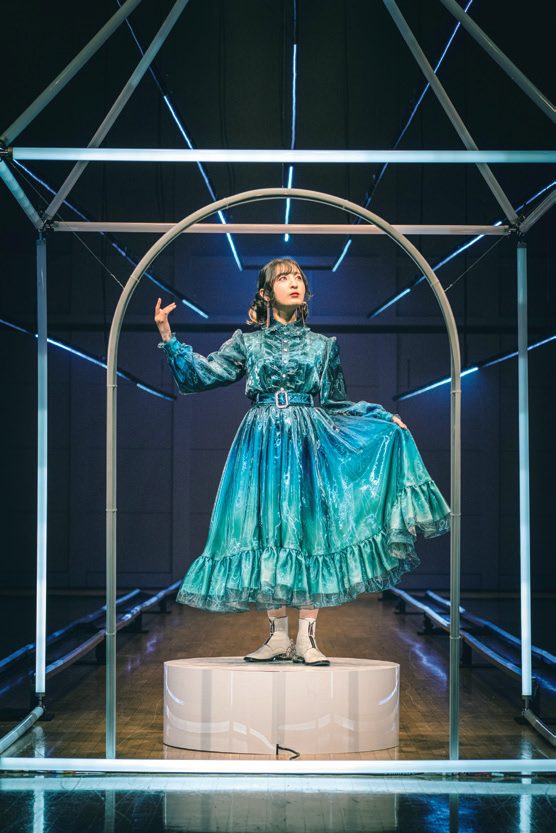
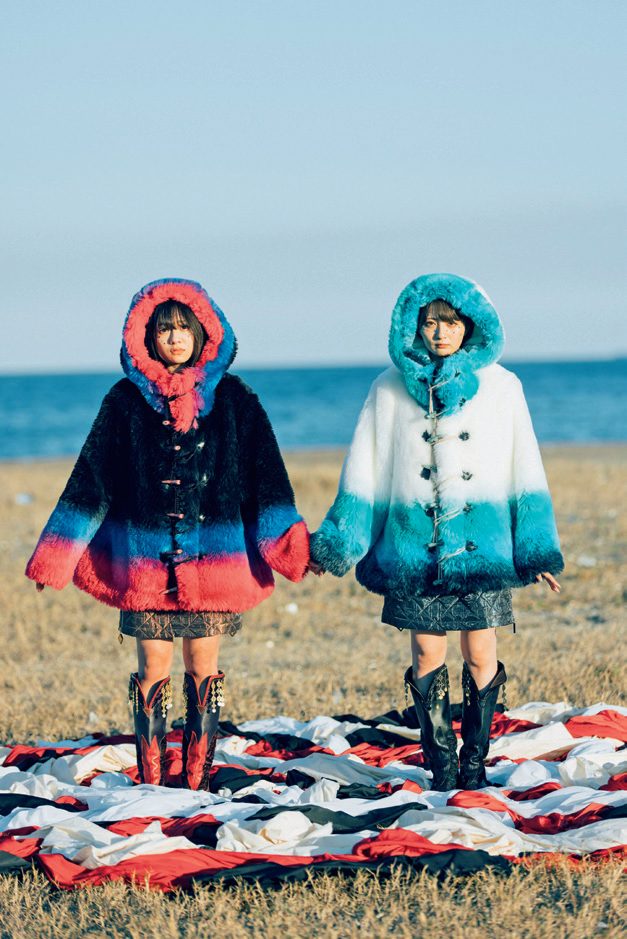
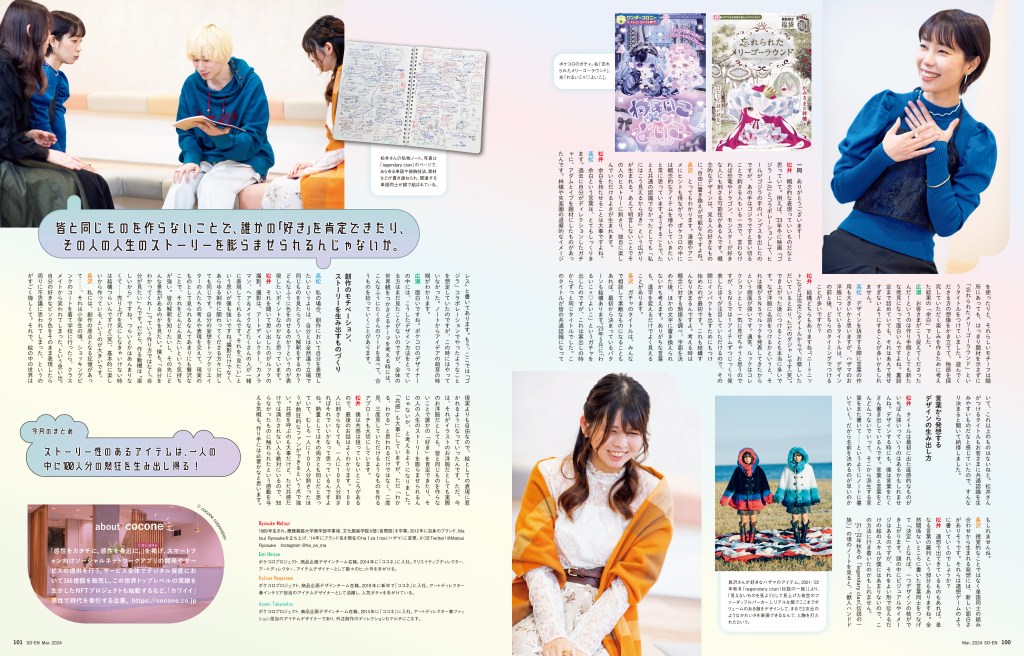
Photo from the Hazama 2023 runway collection ” UNKNOWN UNKNOWN (unknown unknown)”. This was the second season in the brand’s history in which it presented in a show format. On the right is one of Ms. Takamatsu’s favorite pieces, ” a dress of transparent saturation that runs in the night sky as I looked up to see what I could not see”.

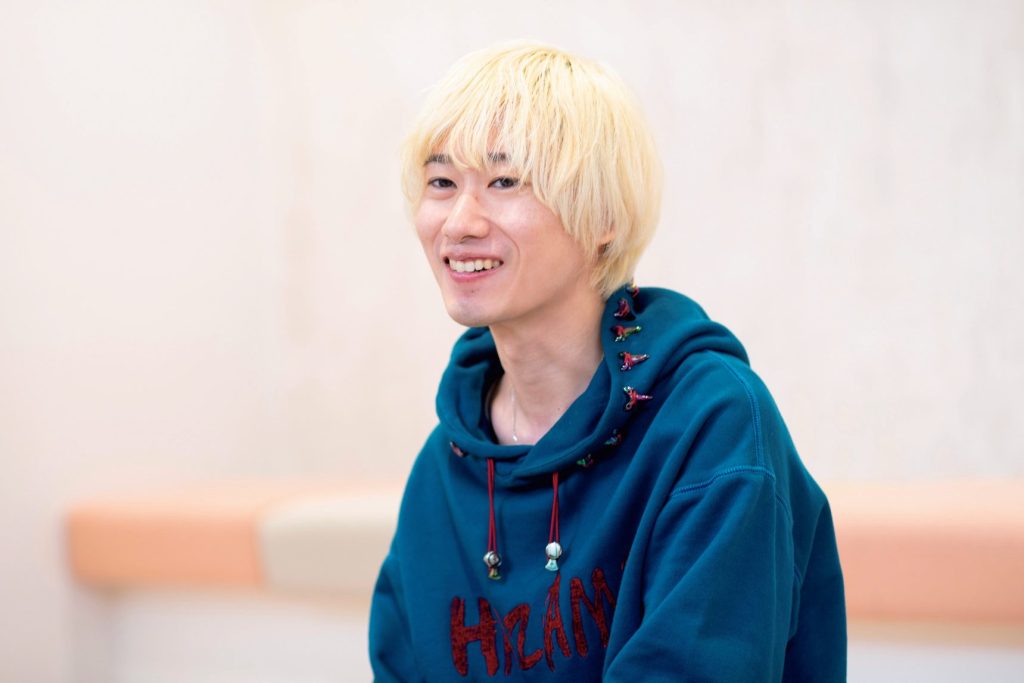
“Gap” and “conceptual design” at the core of the creative process
Matsui: So, I’ll say it, I’m the one who says, “Super good!” “Great!” “It will definitely grow!” It often happens that what I thought would be “super good! On the other hand, unexpected things become popular and grow.
Takamatsu What was the “unexpected growth?”
Matsui: I thought that palm-heeled pumps would never sell.
All of them! (Surprise)
Matsui: Those shoes were originally planned to be made only for 10 pairs for the show. However, they grew quite well, so we decided to commercialize them.
Nagasawa: In the pumps series, there is one with a trigger heel. When I saw that, I was very surprised. The mismatch of combining a feminine heeled shoe with a gun that seems to be a masculine icon. I was impressed by how much impact you could make with just your feet, so I can understand why the response was so strong.
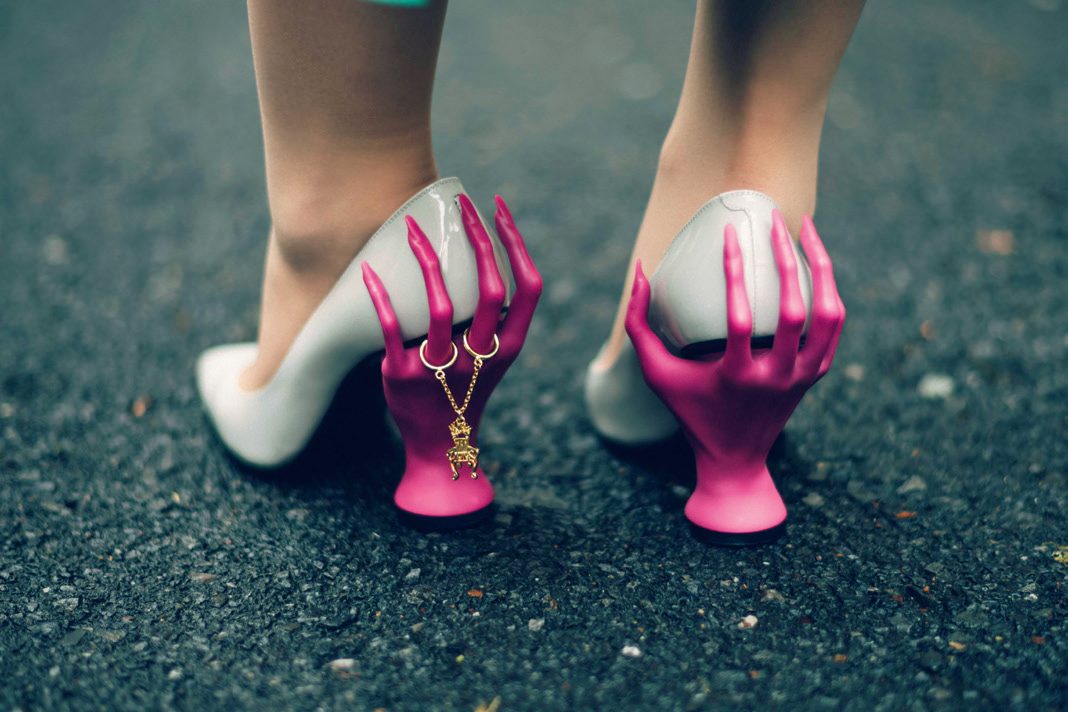
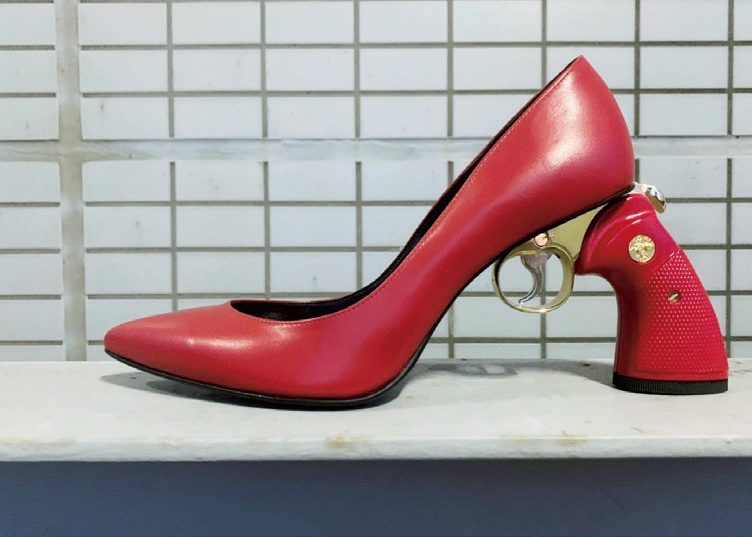
Matsui: Originally, I was going to make shoes that looked like a magical girl’s toy gun with angel wings, but then I realized that the design was complete without the wings, so I stripped it down to that shape. Earlier, you mentioned that the combination of different world lines is popular, and I think that ” gap ” is the most fundamental aspect of my own design and manufacturing.
Speaking of Hirose Gap, I was surprised to see the Autumn/Winter 2021-’22 collection, ” The Storytelling Dress that Spins and Weaves the Void “. It is a beautiful dress with a nice silhouette, and when I enlarged the image on my phone, to my surprise, the pattern looks like an insect! I’m really not good with insects, so I was frustrated when I realized that I couldn’t undo the feeling I had of thinking this insect motif was wonderful (laughs). I was betrayed in a good way, and I love this dress.

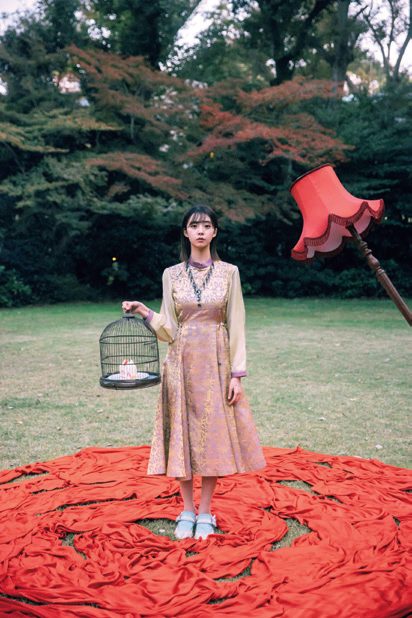
The Hazama item that left an impression on Ms. Hirose was the “one-piece dress of a story that spins and weaves the void” from the Fall/Winter 2021-’22 “legendary clan” collection. She was surprised at the unexpectedness that the motif of the elegant one-piece pattern was a patterned insect motif.
Matsui: That is another gap! At that time, there were people who said they would not come to the exhibition because of the spider and bee motifs (laughs). I thought it was cute as a character because the spider could emit endless threads and the bees were like a waiting needle ……, insects from a place where a fictional tribe lived, so I thought it was a good idea.
I played with “Pokecolo” and all I could say was, “I totally get this design. Many of them fit well as concepts, and I really enjoyed dressing them up.
Thank you very much!
Matsui: I think conceptual expressions are good. For example, in the winter of 2011, we collaborated with the movie “Godzilla 1.0” to produce pumps with Godzilla hands on the heels. There is that. Conceptual design can be freely replaced by whatever the viewer likes.
Nagasawa I understand very much. I always want to increase the number of conceptual items in Pokecolo, while also taking hints from manga and anime. By doing so, even if it is not a common understanding, it will spread to “I like it because it looks like this to me. By daring not to state it explicitly, it sticks to the history of the person and creates the goodness of being able to enjoy it in a unique way.
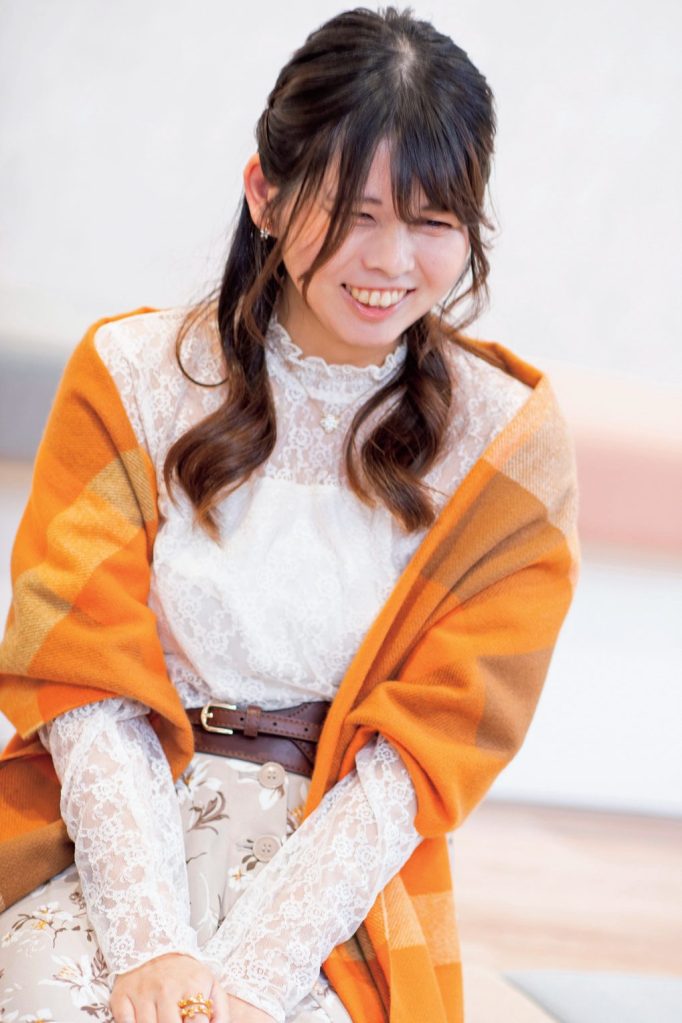
Matsui: It is important to have margins.
Takamatsu: The word “margins” fits very well. In the past, I directed a gacha with the theme of Adam and Eve. I used decadent images of apples and Paradise Lost, and other such motifs, but I titled it “The Forgotten Merry-Go-Round” without clearly indicating the subject matter. The ” blank space ” was the result of my thought to stimulate the imagination of those who would play the game and create enjoyment for them to explore the story.
Hirose: It’s interesting for the creator to hear that the customer has taken it this way! It is an interesting new discovery on the part of the creator. Even if we have worked out the details of the backstory, we often try not to show too much of it.
Takamatsu I think words play a big role in promoting a design, but do you often put titles on Hazama’s clothes before or after the design?
Matsui: There are quite a few of both. The “Neat Knit” is completely from the title, and as you may have guessed, it’s just a pun (laughs). (Laughs.) I often give them names after they are finished. As for why I give names to my clothes, it is because I have been presenting my looks on social networking sites. Usually, a collection of looks is shown all at once, but on social networking sites, it is better to show one item at a time so that people will pay attention to it. It was also quite easy to come up with this one. When I think about it, I look up analogous words for the concept, decide on the letterforms, and then consider whether I can replace them with other characters. Sometimes a common word can be made to look better just by changing the kanji.
Nagasawa: Sometimes the title of a gacha is decided after consultation with everyone, and other times it is decided from the beginning. In May 2011, we launched a gacha called “Bad Girl x Handsome Good Girl,” and this title has been the same ever since it was first proposed. This title has been the common understanding among everyone, and we thought that there was nothing better. I felt that the title you gave was also easy to create a common understanding among customers, so I was satisfied when I heard that it was decided so easily.
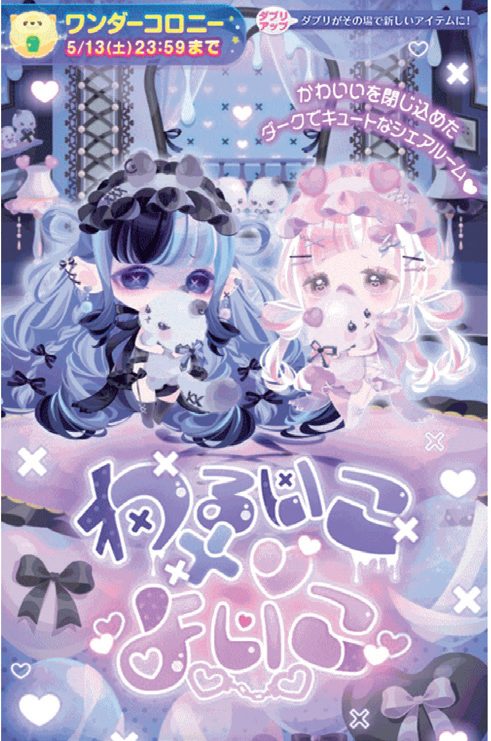

Pokecolo gachas. Right, “Forgotten Merry-Go-Round”; Left, “Bad Boy x Good Boy.
How to create designs inspired by words
Matsui: It may be that the first intuitive idea for a title is the strongest. When I design, I write down a lot of words. I connect words with words, and then I write down words derived from them in a notebook like ……. Maybe that is why I am so quick to choose a name.
Nagasawa There seems to be a new interest in ideas that come not from visuals but from word-to-word combinations. Are those to be written like an association game?
Matsui: Some of the ideas come from associations, while others are simply a list of words. When words written in completely unrelated places are connected and “decided,” a design nucleus is created. I have visuals and images in my head, but I don’t have the drawing skills to convey them in a good way, which is probably why I ended up with this method.
If you look at my notes from the “legendary clan” days of Fall/Winter ’21 -’22, it says “beastman hand dress. I had already envisioned something like what we did here with the ” Godzilla ” collaboration, but it was not done at this time. The notebook shows the time when the idea sprouted.
Hirose: That’s interesting. I have yet to see any Pokecolo designers using this kind of design method, but when I think of a theme that controls the overall world view, I sometimes line up many words like this and pick out the ones that fit.
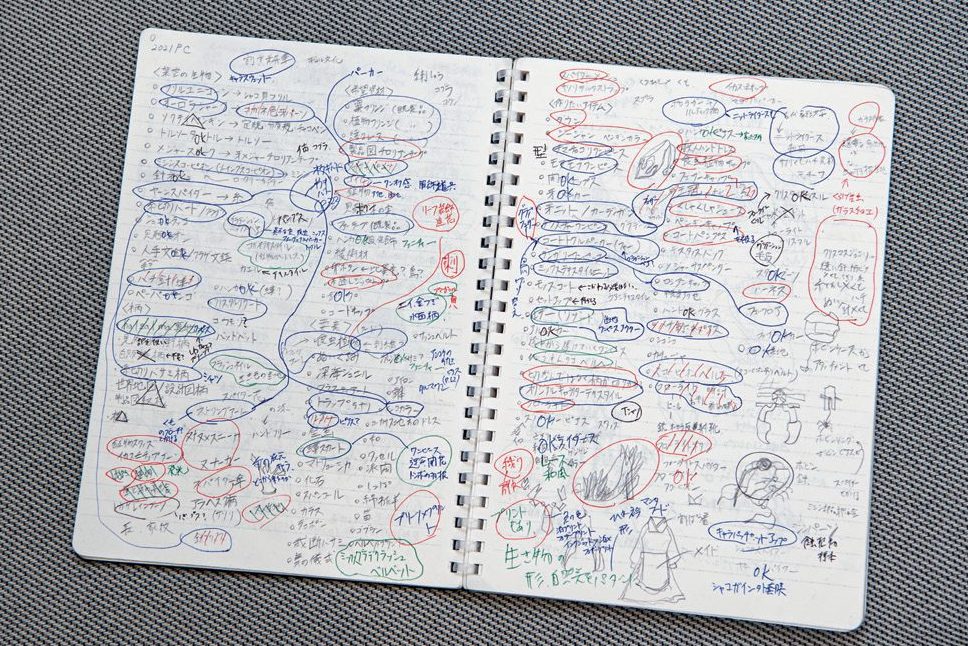
Matsui’s personal notebook. The photo shows the “legendary clan” page, where all kinds of words, decorative techniques, materials, etc. are written, and related words are connected with each other by lines.
Motivation for creation, creating things that create stories
Takamatsu: In my case, rather than wanting to express myself in my creations, I am more interested in how I would interpret the same thing if I were in a completely different position from myself. How would I put colors on it? I think that is the point I want to express.
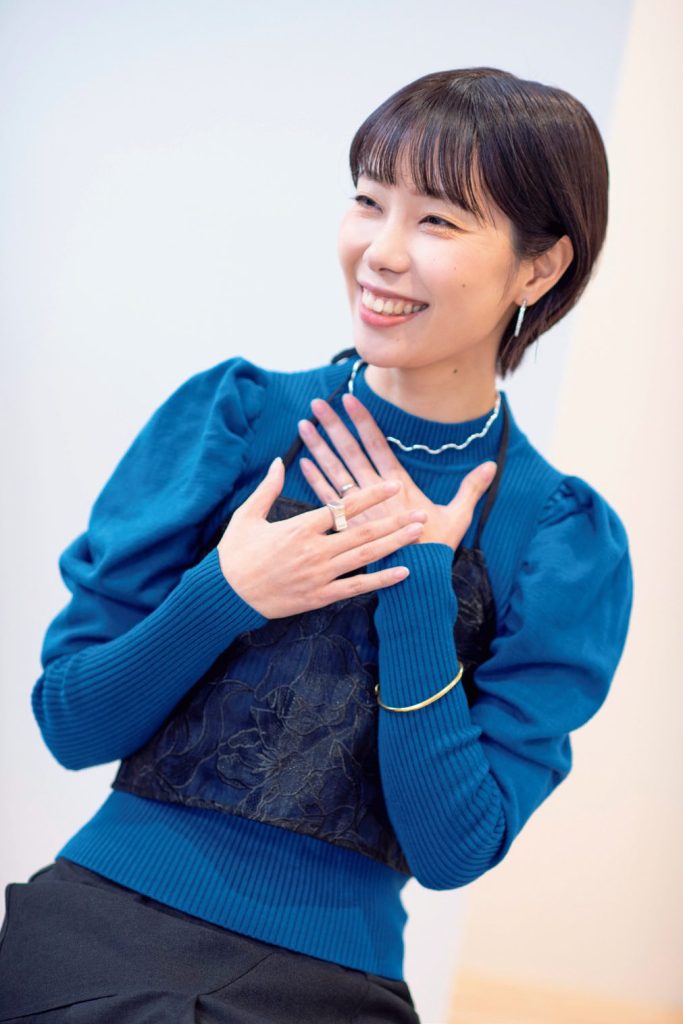
Matsui: That reminds me of the look shoot. For the shoot, many people including the art director, photographer, and hair & makeup artist work together to express the look. I too have a strong desire to ” see ” them. It is the same for the people who are involved in every aspect of production, not just the shooting. It is such a luxury to be able to see my fantasies as reality with the thoughts and expressions of top creators, and I have a strong desire to see more and more of it. I want to know everyone’s interpretation and see what kind of scenery lies ahead. I, too, want to see what I want to see, rather than making something that says, ” You have to understand me! I don’t want to make something that says “understand me,” but rather “I want to see myself. That’s why my motivation for making them is “because it’s fun. It’s not too hard when I have to worry about the sales of …… (laughs), but basically, I make them because they are fun.
Nagasawa: I have a memory that serves as the starting point for my creative work: ……. It was when I was in elementary school, I wore a shocking pink coat to school and my classmates laughed at me. I was so frustrated that people around me thought I was strange for expressing my favorite pink color as it is. So I began to be attracted to expressing myself as a picture, because the world in pictures is freer than in reality. However, I now think that I can affirm someone’s “likes” by not making the same clothes as everyone else, whether they are illustrations or actual clothes, and that I can expand the story of that person’s life. I value “empathy,” but I also value the approach of creating something that will not just make people think, “I understand, I understand,” but something that will make them look at it a second or third time.
Matsui: I am not aiming for sympathy, so I understand what you said at the end. I think that both are the same in terms of the amount of heat, and if I can reach one person for 100 people, that is stronger in terms of creating a passionate fan base. It is important to evoke sympathy, but there are definitely people who are not satisfied with just sympathy alone, so I think it is necessary for the creator to be willing to give the impression of having been touched by something that was unknown to them.
Summary of this month
A storybook item can generate the enthusiasm of 100 people in one person!
Click here for a list of Designer jobs