Cocone CS dialogue has been posted


※This article is machine translated.
In our company, marketing and CS are handled by the same executive officer. Marketing and CS are generally considered to be two different things, but why are they lumped together in the same category at our company? Through an interview with Yosuke Tomita, executive officer in charge, we would like to explain our intention.
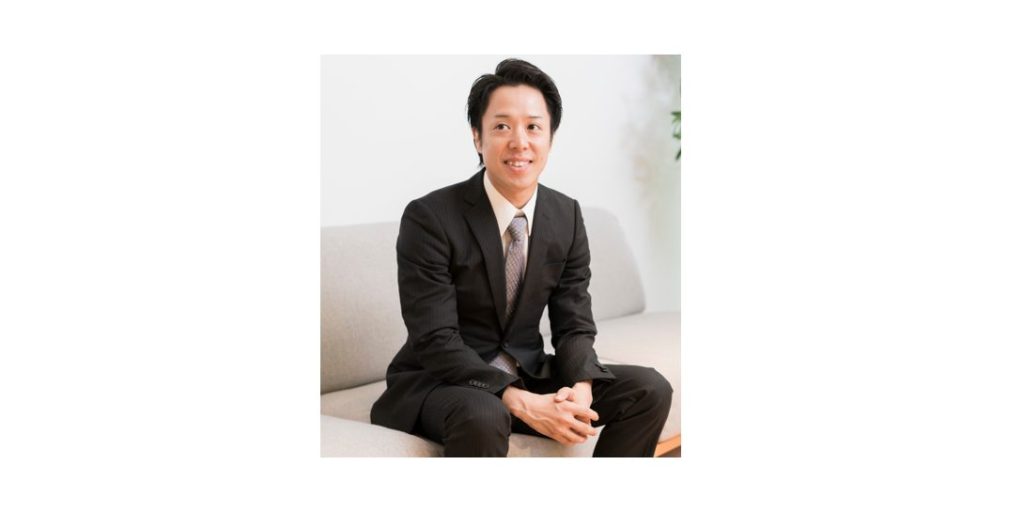
Interview with Yosuke Tomita, Executive Officer
[ biography ]
B.A., Faculty of Environment and Information Studies, Keio University, 2003
2003 Producer, Square Enix
2010 General Manager, Publishing Game Division, GREE, Inc.
2011 GREE Beijing, Inc. Senior Vice President
2014 Joined Cocone Corporation
“I moved to Cocone because of Cocone’s name!”
Ishiwatari: Why did you choose Cocone?
Tomita: I chose the smartphone industry as the place to take on my next challenge. When I looked around the industry, Cocone seemed more unique than any other company. At first I wondered, “Is it because they run an app for women, not a game, but an avatar service?” or “Is it because the company is small but has a high percentage of women and foreign nationals? (*)” But it seemed that there was more to it than that.
(*) Gender ratio is 4:6, with more women than men. Foreign nationals account for 20% of employees (6 countries).
In conclusion, Cocone is a company that values “sensitivity. And the representative who created it, Sen (Yoshiaki Sen/Chun Yang Hyun, Representative Director, Cocone Corporation), was by far the most unique and fascinating person.
Ishiwatari: What exactly did you find unique about it?
Tomita: The company name Cocone struck me as unique. It’s an acronym for “Heart, Language, Networking.” At first, I thought, “In the age of smartphones, what is ‘Kokoro’? I thought (laughs).
“I was exposed to a service called Pokecolo.”
However, after listening carefully, I understood that Pokecolo’s business is a job that requires “whether or not you can create something that touches women’s heartstrings and subtleties of the heart.”
Unlike the game, the clothes you can get at Pokecolo have no parameters. Changing clothes does not make you stronger, and there are no strong dragons to slay. So there is no need to even change clothes.
But with “Pokecolo,” you can feel the seasons and the “wabi-sabi. As a result of the accumulation of such sentiments, a feeling of ” how cute, I want to change my clothes ” is fostered.
For example, in Pokecolo, when I wear a kimono, I walk slower than usual. I wondered if it was a glitch because I was walking slower. But when I asked him about it, he replied angrily, “It is natural for a person to walk more slowly in kimono.
I began to understand that Pokecolo’s clothes are priced as a result of manufacturing that responds to such delicate sensibilities.
And such sensitive concern was felt not only at Pokecolo, but throughout the company. At Cocone, even among employees, language and concern are important.
As I came into contact with these things, I was attracted to the uniqueness of Cocone and Pokecolo, and the uniqueness of the representative who created them, and I became interested in working with them.
Ishiwatari: Mr. Tomita is often instructed by such a chairman (laughs).
“Our most loyal customers in the last month.”
Tomita: Yes, we are having all our values struck again.
This is from the first day I was involved in the Pokecolo service. Chairman Sen asked me, “What was your MAU last month?” Chairman Sen asked me, “What was the MAU last month? (Monthly Active User.)
I could answer the KPI as if I were sucking in my breath, and with a scowl I replied, “It’s XX thousand people.”
Chairman: “What about the ARPPU?”
” ARPPU is ____” (ARPPU: Average Revenue Per Users, i.e., purchases per user)
Chairman: “Now, who has patronized you the most in the last month?”
So, it became ” eh ・・・・・.
Chairman “… Why don’t you even know the names of your most loyal customers? Then surely you don’t know the clothes they wore yesterday, or what designs they like?” And.
Ishiwatari: Yes, KPIs are useful for understanding the overall picture, but it is obvious that the numbers are made by each and every customer. It is surprisingly difficult to imagine each and every customer online.
Tomita: That’s right. Furthermore, the chairman said to me, “Have you ever been to 109 in Shibuya? The charismatic store clerks there will be able to talk to you at the Shibuya scramble crossing if you are a customer. How are you? Are you okay with your clothes the other day? They might even worry about their best friends or family members. But you only know the numbers. And you think you understand them. There is a problem with your attitude toward your work. It’s not worth talking about. It is true that in my past work in game development and operation, I had only understood customers as a group and had not been conscious of each individual customer within that group.
” to the marketing manager.”
Ishiwatari: After that, you reflected on the situation and focused on marketing first.
Tomita: Yes, Pokecolo had several million users at the time I joined the company. We have decided that it is time to make more customers aware of the appeal of Pokecolo through marketing than ever before.
I had no real business experience in marketing, but in response to the Chairman’s words, “It’s all a matter of attitude,” I studied from the ground up and worked to improve marketing’s unique KPI design and ROI, and was successfully able to be of service.
Of course, we don’t just understand the numbers, but we meet the actual customers and talk to them (laughs).
Now that I am considerably more knowledgeable about marketing and have the ability to think about the Cocone-like customer, I am confident enough to go out on my own in marketing (laughs).
Ishiwatari: You have grown up!
” from marketing to CS too!”
Ishiwatari: Now let’s talk about your other role, CX.
Tomita: At Cocone, we have a Customer Experience (CX) team that is very focused on customer service, generally called the Customer Support (CS) team, which answers questions received from customers.
Ishiwatari: Not customer service, but customer experience. You are aiming to create an experience that moves people. It is a unique arrangement to simultaneously see marketing as the role of bringing in customers from the outside and the role of keeping customers coming back for a long time.
Tomita: I think it is characteristic that we see customers at the entrance who download Pokecolo because they are attracted to it, and at the same time, we see customers who are in trouble or having problems. Other times, marketing is somewhat flowery and customer support seems literally supportive, but I wonder if this is because Cocone is aiming for customer support to be something completely different, and that’s why it’s arranged the way it is.
Ishiwatari: Yes, it is very common in Cocone, but it is a very difficult thing to say. He said, “We must first do something that is naturally done in the offline industry and has not been realized through IT.”
Tomita: Yes, that’s right. When I explain to them that we compare our level of service with our competitors and benchmarks, they say, “It’s not a matter of saying we don’t have to do it because other companies aren’t doing it either. We should make a judgment as to whether we should do it as Cocone or Pokecolo.
Ishiwatari:When it came time to set up the CX team within the company, we did things in a way that is typical of Cocone, such as having the entire company respond to customers.
Tomita: CS was done internally and asked to be done externally, but in order to realize the goal of “Let’s aim for customer experience,” we started to make it possible to deal with customers internally once again.
First, I started actually replying to customer inquiries myself. In the process of wholeheartedly replying to a large volume of inquiries, we have come to receive words of gratitude and scolding from customers, which we do not see when we are replying efficiently.
When I told the chairman and Mr. Ishiwata about my experience of being able to communicate with customers from the heart, but also about the mountain of issues that still remain to be solved, he said, “I now understand the current situation. It is a company-wide problem that we are not responding well to customers. It is not right that only the CX team should deal with customers. It is a problem for all employees. First of all, all employees should deal with customers.
Ishiwatari: It was really an all-employee response, including not only designers and engineers but also accounting, human resources, and other back-office personnel. We hoped that designers would listen more to customers’ opinions and engineers would be able to solve customers’ problems more quickly. As a side effect, the designer’s response to customers has gone beyond the CX team’s previous replies.
Tomita: Yes, that’s right.
For example, “I’d like you to reprint an item called Pink Ash Asime!” I would like to have the item called “pink ash asymmetric” reprinted.
In the past, I would have just replied, “Thank you for your request for a reprint,” but the designer replied
We still have a similar item called “Rockin’ Pink Mesh” in our Dark Rock Gacha, if you would like to check it out. Please check it out if you would like to know more.
I learned a lot from the store clerks, as I felt the customer service that should be there.
In addition, we have come to be able to express many other things that are digital items, but that are treated like actual clothing, and we have come to be able to properly express the worldview of living creatures such as colonizers and pets.
We are sorry that we still have to keep you waiting for our response time, but we have improved it to 1/5 of the waiting time before we started the project.
Of course, we will continue to improve and reduce waiting time.
Ishiwatari: I have the impression that we are now able to make more detailed improvements than before, as we often receive feedback from customers who are very loyal to Pokecolo. For example, in response to the feedback that the more items one collects, the more difficult it becomes to find them, this led to plans to change the items to be carried.
Tomita: That’s right. Of course, for our customers, I am very sorry to say that we are still lacking in one word, but even so, I feel that we are moving in the right direction by creating a culture in which the entire Cocone team, not only the CX team, but also designers, developers, and back office staff, are working together to respond to customer feedback.
Ishiwatari: The CX team is also very focused on recruitment.
Tomita: Yes, we are actively hiring professionals in the service industry to realize online customer service. We also hire engineers dedicated to the CX team to bring their offline customer service experience online. In addition, many housewives are also active in the company.
We had the opportunity to hear from a woman who left the company when she got married and had a baby, who said, “I graduated and worked as a full-time employee, but when I tried to return to society, the length and flexibility of my work hours prevented me from applying to return to the front lines of business.”
We believe that it would be a shame to see the abilities that we have worked so hard to develop since graduation go unused, so Cocone’s CX team is actively creating an environment where housewives can work as well.
And the CX team’s dedicated engineers enable housewives and women with customer service experience to exercise their abilities in a short period of time.
We also have many talented students from Tokyo University and Waseda-Keio who are working as interns because they share our goals of “enabling women and housewives to be active for longer periods of time” and “realizing online services that are similar to offline services.
Ishiwatari: What kind of person are you looking for on Cocone’s CX team in the future?
Tomita:
1. those who want to realize “services” that are naturally provided offline, but also online.
2. aspiring engineers who want to introduce more technology to solve problems in the field of CS, which is often solved by communication skills.
3. those who want to make more use of their sensitivity in dealing with customers.
That is all.
Pokecolo provides FAQs by transcribing frequently asked questions as cartoons. We also want to handwrite seasonal letters to our customers.
We would like to invite those who are interested in Cocone’s unique and soft customer service, not to mention the efficient response that is naturally required in the industry and by other companies, to come and talk with us.
Ishiwatari: I would love to work with people who are interested in customer service with Cocone’s unique sensibilities to make Pokecolo Cocone a great place to work. I look forward to continued marketing and a CX team that can deliver an inspiring experience online!
Tomita: Thank you very much, we will continue to do our best!
・・・・・・・・・・・・・・・
Thank you for taking the time to read this interview.
We are hiring for the following positions related to this paper. If you are interested and would like to apply, we would be happy to hear from you.
Head of CX Team
CX Team Operator
Marketing Manager
(Interviewer: Mai Ishiwatari, Executive Officer)
About Cocone
| Company name | Cocone Corporation |
|---|---|
| Business Overview | Social game business, social network service business, language business |
| Location | 4-9-10 Ebisu, Shibuya-ku, Tokyo |
| representative | Representative Director Chun Yang Hyun |
Cocone Corporation
〜Forming sensibility, bringing sensibility closer to you…